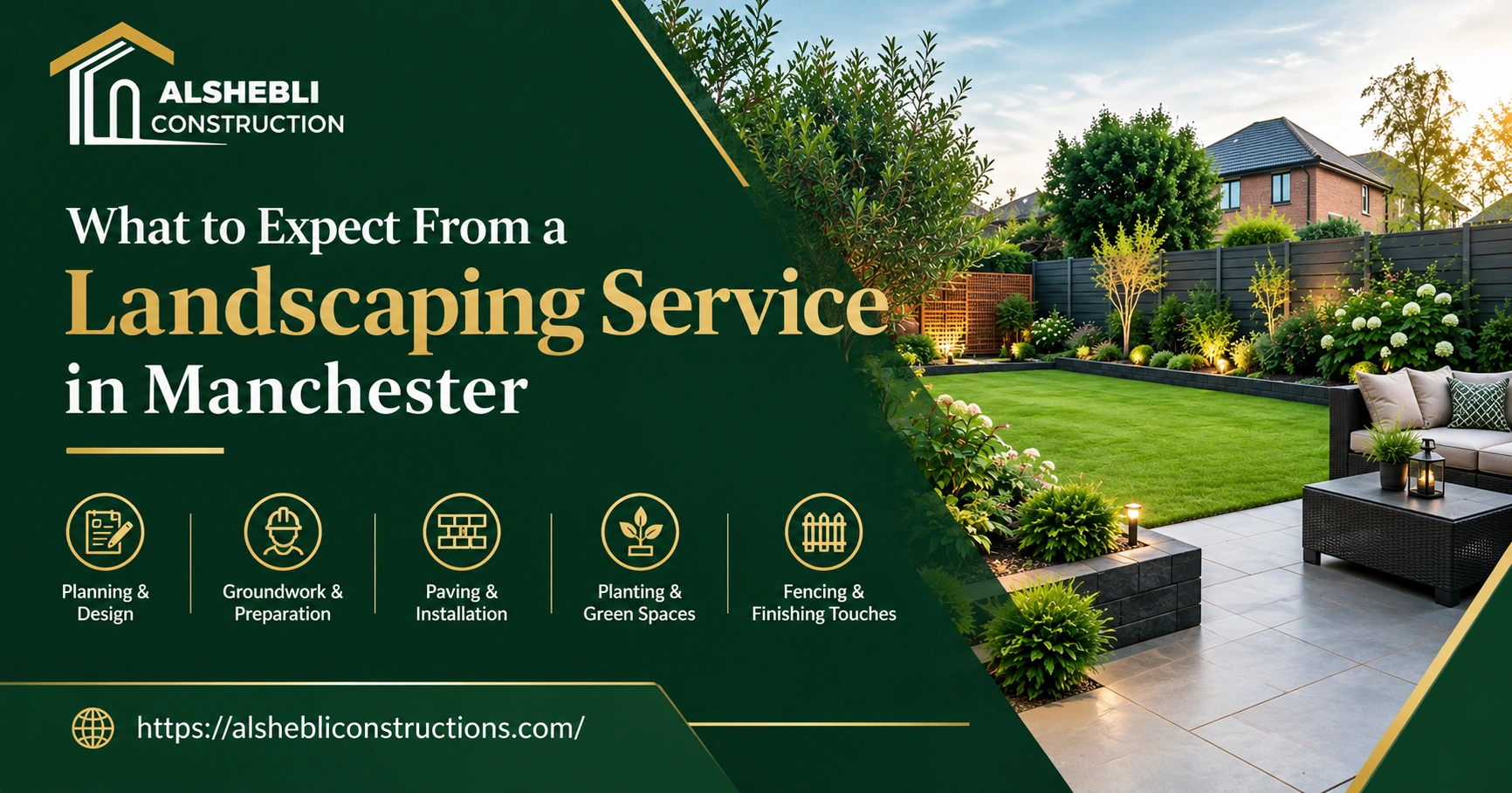
Hiring a professional landscaping service in Manchester can make a significant difference to the appearance, usability and long-term condition of your outdoor space. Whether you have a small garden, a large backyard or an outdoor area that needs a complete transformation, professional landscaping can help you create a space that suits your property and lifestyle.
However, many homeowners are unsure about what actually happens when they hire a landscaping company. Does the process begin with a garden design? Will the contractor handle groundwork and drainage? What materials can be used? How long could the project take?
This guide explains what to expect from a professional landscaping service in Manchester, from the first consultation and site assessment to garden preparation, paving, planting, fencing, drainage and the final finishing touches.
What Does a Landscaping Service in Manchester Include?
Landscaping is much more than simply adding plants to a garden. A professional landscaping service in Manchester can combine design, construction, planting and practical improvements to create a complete outdoor space.
Depending on your property and requirements, landscaping services may include:
- Garden design and planning
- Lawn installation and renovation
- Patio and paving installation
- Garden paths and walkways
- Planting beds and borders
- Trees, shrubs and ornamental plants
- Fencing and gates
- Garden walls and retaining features
- Ground preparation and levelling
- Drainage solutions
- Outdoor seating areas
- Garden renovation and makeovers
The exact combination of services will depend on what you want to achieve.
For example, one homeowner may only need a new patio and lawn, while another may require a complete garden renovation involving excavation, drainage, fencing, paving and planting.
Al Shebli Construction lists landscaping among its property improvement services and also provides wider construction and renovation solutions in Manchester.
1. The Initial Landscaping Consultation
The first step is usually an initial consultation. This is an opportunity to explain what you want to change and what you expect from your new outdoor space.
You may want to discuss:
- The current condition of the garden
- How you use the outdoor space
- Your preferred garden style
- Patio or paving requirements
- Lawn requirements
- Planting preferences
- Fencing and privacy
- Drainage concerns
- Maintenance expectations
- Your approximate budget
- Your preferred completion date
A good consultation should be a two-way conversation. You explain your goals, while the landscaping professional assesses what is practical for the property.
For example, if you want a large paved entertaining area, the contractor may need to consider existing ground levels, drainage, access and the condition of the underlying soil before recommending a particular design.
2. A Site Assessment of Your Manchester Garden
After discussing your requirements, the landscaping team may assess the garden itself.
A site assessment can identify issues that may not be obvious when simply looking at the garden.
These can include:
- Uneven ground
- Poor soil conditions
- Waterlogged areas
- Existing drainage problems
- Difficult access
- Damaged paving
- Unstable walls
- Old fencing
- Overgrown vegetation
- Existing trees and roots
- Areas that receive limited sunlight
The assessment helps determine what preparation will be necessary before the new landscaping is installed.
This stage is especially important when a project includes substantial paving, retaining walls, changes in levels or drainage work.
3. Garden Design and Planning
Once the site has been assessed, the next stage is developing a practical landscaping plan.
A good garden design should consider both appearance and functionality.
For example, a family garden might require:
- A usable lawn
- Safe pathways
- A patio for outdoor dining
- Durable surfaces
- Fencing
- Low-maintenance planting
A garden designed primarily for entertaining might instead focus on a larger patio, seating areas, lighting and planting around the perimeter.
For smaller Manchester gardens, careful planning can help avoid making the space feel crowded. Vertical planting, defined zones and appropriately sized paving can help make better use of limited space.
The design should also consider how the garden will look throughout the year. Choosing a mixture of plants with different flowering periods, textures and evergreen characteristics can provide more consistent visual interest.
4. Ground Preparation and Landscaping Work
Before installing new features, the garden may need considerable preparation.
Depending on the project, this can involve:
- Removing old paving
- Clearing unwanted vegetation
- Removing garden waste
- Excavating soil
- Levelling the ground
- Preparing foundations
- Improving soil
- Creating new planting areas
- Preparing areas for lawns
- Adjusting ground levels
Ground preparation is one of the most important parts of a landscaping project because many finished surfaces depend on what is underneath them.
For example, paving installed over an unsuitable or poorly prepared base can become uneven over time. Similarly, planting in compacted or unsuitable soil can make it difficult for plants to establish properly.
A professional landscaping plan should therefore consider the condition of the site before focusing only on the visible finishing materials.
5. Paving and Patio Installation
Paving is one of the most common elements of a garden landscaping project.
A new patio can create a dedicated area for:
- Outdoor dining
- Garden furniture
- Entertaining guests
- Relaxing
- Barbecues
- Connecting the house with the garden
There are many paving options, and the right choice depends on the property’s style, intended use, maintenance requirements and drainage considerations.
When choosing paving, consider:
- Material
- Texture
- Colour
- Durability
- Slip resistance
- Maintenance
- Drainage
- Overall appearance
Rainwater management should also be considered when introducing large areas of hard landscaping.
The Royal Horticultural Society explains that non-porous hard surfaces can increase rainwater runoff and recommends considering permeable paving and keeping hard surfaces to a practical minimum where appropriate.
This is why drainage should be discussed before a large patio or paved area is installed.
6. Planting and Soft Landscaping
Soft landscaping introduces living elements into the garden.
This may include:
- Lawns
- Trees
- Shrubs
- Hedges
- Perennial plants
- Ornamental grasses
- Flower beds
- Ground-cover plants
Plant selection should take the conditions of the garden into account.
Important factors include:
- Amount of sunlight
- Soil type
- Drainage
- Available space
- Plant maintenance requirements
- Desired appearance
- Seasonal interest
A professional planting plan should also consider how large plants may become in the future.
A plant that looks appropriately sized when installed could eventually become too large for a narrow border or interfere with paths and structures. Planning for mature size can help reduce future maintenance problems.
7. Lawn Installation and Garden Areas
If your existing lawn is damaged, uneven or difficult to maintain, landscaping may include lawn renovation or replacement.
Depending on the situation, this could involve:
- Removing the existing lawn
- Preparing the soil
- Levelling the area
- Improving soil quality
- Installing new turf
- Seeding a new lawn
- Creating defined lawn edges
The correct preparation is important for establishing a healthy lawn.
A landscaping professional can also help you decide whether a traditional lawn is suitable for your requirements or whether planting beds, paving or alternative ground cover would make better use of the space.
8. Fencing, Gates and Privacy
Fencing can form an important part of a landscaping project.
It can help:
- Define property boundaries
- Improve privacy
- Create separate garden areas
- Improve security
- Provide support for climbing plants
- Give the garden a more finished appearance
The right fencing style depends on the property and your priorities.
For example, homeowners looking for greater privacy may prefer taller screening, while decorative fencing can be appropriate when maintaining an open appearance is more important.
If fencing is being installed alongside new planting and paving, coordinating these elements during the design stage can create a more consistent finished garden.
9. Drainage and Water Management
Drainage is one of the most important practical considerations in garden landscaping. If your garden regularly develops standing water after rainfall, simply installing new paving or planting may not solve the underlying problem.
Poor drainage can result in:
- Waterlogged lawns
- Standing water
- Damaged plants
- Muddy areas
- Slippery paving
- Soil erosion
- Problems around patios and paths
The RHS recommends identifying where surplus water can go before installing garden drainage. Possible solutions depend on the site and may include suitable drainage systems, French drains, soakaways or changes to the garden’s design.
This means drainage should be considered during the planning stage rather than added as an afterthought.
Permeable paving can also be useful in appropriate situations because it allows water to pass through the surface rather than creating the same level of runoff as some impermeable surfaces.
10. Choosing Materials for Your Landscaping Project
Material selection can have a major effect on the appearance and performance of your garden.
Common landscaping materials include:
- Natural stone
- Concrete paving
- Porcelain paving
- Block paving
- Gravel
- Timber
- Composite materials
- Brick
- Decorative aggregates
When choosing materials, don’t consider appearance alone.
Think about:
Durability: Will the material cope with regular use and outdoor conditions?
Maintenance: How much cleaning or upkeep will it require?
Drainage: Will the surface allow or direct water appropriately?
Safety: Is it suitable for walkways and areas that may become wet?
Style: Does it complement the property and surrounding garden?
Budget: Does it fit within the overall project cost?
A professional contractor can explain the practical differences between suitable materials before installation begins.
11. Project Costs and Quotations
Landscaping costs can vary considerably from one property to another.
The final price may depend on:
- Garden size
- Amount of groundwork
- Materials
- Paving area
- Planting requirements
- Fencing
- Drainage
- Waste removal
- Access to the property
- Design complexity
- Labour requirements
A detailed quotation should make it easier to understand what is included.
Before agreeing to the work, ask whether the quotation includes:
- Materials
- Labour
- Ground preparation
- Waste removal
- Excavation
- Delivery
- Installation
- Finishing work
It is also sensible to clarify how additional work will be handled if unexpected ground conditions are found during excavation.
12. How Long Does Landscaping Take?
There is no single timeframe for every landscaping project.
A small garden improvement may take considerably less time than a complete garden renovation involving excavation, drainage, paving, fencing and planting.
The schedule can be affected by:
- Garden size
- Weather
- Access
- Ground conditions
- Design complexity
- Material availability
- Amount of groundwork
- Drainage requirements
A professional contractor should discuss the expected stages of the project with you before work begins.
Weather can be particularly relevant to outdoor construction and planting, so the expected timeline may need to remain flexible.
13. Planning Permission and Local Considerations
Not every landscaping project requires planning permission. However, some outdoor projects can be affected by planning rules and local restrictions.
GOV.UK explains that permitted development rights have specific conditions and limitations, and additional restrictions can apply in certain designated areas.
Trees are another important consideration.
If a tree is protected by a Tree Preservation Order, permission from the relevant local planning authority is generally required before certain work is carried out. Additional controls can also apply to trees in conservation areas.
Therefore, if your landscaping project involves removing, heavily pruning or substantially altering established trees, check the applicable requirements before work starts.
The same principle applies to significant structures, boundaries and other work where planning restrictions may apply.
14. What to Expect During the Landscaping Work
Once the project starts, there may be several stages of activity around your property.
Depending on the work, you may see:
- Site preparation
- Removal of old materials
- Excavation and groundwork
- Drainage installation
- Base preparation
- Paving or construction
- Fencing installation
- Soil preparation
- Planting and lawn installation
- Final cleaning and finishing
Some stages can be messy, particularly excavation and removal work.
A professional team should keep the project organised and communicate with you if unexpected issues affect the original plan. It is worth discussing access, storage of materials, working hours and waste removal before work begins.
15. What Should You Ask a Landscaping Company?
Before hiring a landscaping contractor, ask questions that help you understand exactly what you are paying for.
Useful questions include:
- How much experience do you have with similar projects?
- Can you explain the proposed landscaping process?
- What preparation will the garden require?
- Which materials do you recommend?
- How will drainage be addressed?
- What is included in the quotation?
- How long is the estimated project?
- Who will carry out the work?
- How will unexpected problems be handled?
- What maintenance will the finished garden need?
- Are there any planning or tree-related considerations?
Clear answers can help you compare contractors based on more than price alone.
Landscaping Maintenance After the Project
A landscaping project does not necessarily end when the construction work is finished.
Your new garden may require ongoing maintenance such as:
- Lawn mowing
- Hedge trimming
- Pruning
- Weeding
- Watering
- Seasonal planting care
- Cleaning patios
- Removing leaves
- Checking fencing and garden structures
The maintenance requirements depend on the design. If you want a low-maintenance garden, tell the landscaping team before the design is finalised. The choice of plants, lawn area, paving and garden features can all affect how much ongoing work is required.
Why Choose Al Shebli Construction for Landscaping in Manchester?
Al Shebli Construction provides construction, renovation and property improvement services in Manchester. Its website identifies landscaping among its services and also highlights areas including renovations, tiling, plumbing and carpentry. The company states that it focuses on skilled professionals, quality standards, timely delivery and customer-focused service. Its website also lists more than 10 years of experience and more than 250 completed projects.
For homeowners planning an outdoor improvement project, this wider construction experience can be useful when landscaping work needs to connect with other property improvements. You can view the company services through its website: Al Shebli Construction services
For project-specific guidance, homeowners can contact the company directly through the Contact Al Shebli Constructions
How to Prepare Before Hiring a Landscaping Service in Manchester
You can make the initial consultation more productive by preparing a few details beforehand.
Make a list of your priorities
Write down the changes that matter most to you.
For example:
- New patio
- Better lawn
- More privacy
- Improved drainage
- New fencing
- More planting
- Lower maintenance
- Better outdoor entertaining space
Take photographs
Photos of the current garden can help communicate what you want to change. You can also collect examples of garden styles, paving and planting that you like.
Think about maintenance
Be realistic about how much time you want to spend maintaining the garden. A garden with extensive lawns, flower beds and hedges may require more regular attention than one with a larger proportion of hard landscaping and carefully selected low-maintenance planting.
Consider future use
Think about how you will use the garden in the next few years.
If you plan to entertain outdoors, you may need a suitable patio and seating area. If children or pets will use the garden, durability and open space may be more important.
Planning around future use can prevent expensive changes later.
Final Thoughts
Knowing what to expect from a landscaping service in Manchester can make the process much easier for homeowners. A professional project involves more than choosing attractive plants or paving. It can include consultation, site assessment, garden design, groundwork, drainage, material selection, paving, fencing, planting and ongoing maintenance considerations.
The best approach is to explain how you want to use your garden, understand what work is required and make sure the quotation clearly outlines what is included.
For homeowners in Manchester considering a garden renovation or outdoor improvement project, Al Shebli Construction provides landscaping alongside its wider construction and renovation services. You can discuss your requirements with the team and establish which solutions are appropriate for your property.
Frequently Asked Questions
What can I expect from a landscaping service in Manchester?
You can generally expect an initial consultation, site assessment, planning, preparation and installation. Depending on your requirements, the project may include paving, planting, lawns, fencing, drainage and other garden improvements.
How much does landscaping cost in Manchester?
There is no standard price because each project is different. Garden size, materials, groundwork, paving, planting, fencing, drainage and project complexity can all affect the final cost. A site assessment and detailed quotation are the best way to establish the likely cost.
How long does a landscaping project take?
The timeframe depends on the size and complexity of the work. A simple project may be completed relatively quickly, while a complete garden renovation can take longer because of groundwork, drainage, paving, fencing and planting.
Should drainage be considered before landscaping?
Yes. Drainage should be considered before installing large paved areas or changing garden levels. Existing water problems can influence the design and construction approach.
What is the difference between hard and soft landscaping?
Hard landscaping refers to constructed elements such as patios, paving, paths, walls, steps and fencing. Soft landscaping generally includes living elements such as lawns, trees, shrubs, flowers and other plants.